


Reps move to strengthen climate framework with decarbonisation bill The House of Representatives is considering a legislation to establish a comprehensive legal framework for Nigeria’s national decarbonisation programme as part of efforts to strengthen the country’s climate transition strategy and accelerate the shift toward a low-carbon economy. Chairman of the House Committee on
Reps move to strengthen climate framework with decarbonisation bill
The House of Representatives is considering a legislation to establish a comprehensive legal framework for Nigeria’s national decarbonisation programme as part of efforts to strengthen the country’s climate transition strategy and accelerate the shift toward a low-carbon economy.
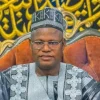
Chairman of the House Committee on Mandatory National Decarbonisation, Sesi Whingan, disclosed this on Thursday while briefing journalists after a stakeholders’ technical roundtable on the national decarbonisation programme in Abuja.
Whingan said although Nigeria currently operates under the Climate Change Act, 2021, the proposed National Decarbonisation Bill is intended to complement existing climate initiatives and strengthen the country’s climate governance architecture.
According to him, the bill has already passed its first and second readings in the House of Representatives and is expected to proceed to a public hearing before the end of the month as part of the legislative process.
“We decided to bring all relevant stakeholders into one room, and currently we are working on a bill known as the National Decarbonisation Bill,” Whingan said.
“This bill is designed to complement what the National Council on Climate Change is already doing. It has already gone through the first and second readings in the House, and hopefully before the end of the month we will move toward the public hearing stage.
“Our plan is to continue engaging stakeholders to see how we can consolidate different government policies and programmes into a workable and achievable framework.”
The lawmaker said participants at the roundtable included representatives from the organised private sector, the oil and gas industry, environmental advocacy groups, energy experts and other stakeholders involved in climate governance at federal and state levels.
He stressed that adequate funding and policy clarity would be critical to achieving the objectives of Nigeria’s decarbonisation agenda, noting that investors require a stable and predictable framework to support long-term investments in clean energy and low-carbon technologies.
“We all agreed that there is a need for strong collaboration between the executive and the legislature so that investors, both within and outside the country, can clearly understand the direction Nigeria is taking in its decarbonisation efforts,” he said.
Whingan added that the decarbonisation campaign must extend beyond federal policy discussions to actively involve state governments and grassroots communities across the country.
To deepen national engagement, he disclosed that the committee plans to convene a National Carbon Summit in June, bringing together representatives from the 36 states and the 774 local government areas.
According to him, the summit will provide a broader platform for discussions on how Nigeria can effectively implement a national decarbonisation strategy while balancing economic growth with environmental sustainability.
“There is no way we can achieve significant progress if local communities are not involved. We must move beyond conversations at the top and take the programme down to the grassroots,” he said.
Whingan explained that the committee was established to review Nigeria’s existing climate laws and policies, audit the country’s emission profile across key sectors, and identify the institutional, fiscal and technological requirements for implementing a compulsory nationwide decarbonisation programme.
He added that the committee is engaging ministries, government agencies, state governments, industries, civil society organisations and international partners to ensure the proposed framework aligns with global best practices in climate governance.
Also speaking at the roundtable, Director for Africa at the Global Wind Energy Council, Wangari Muchiri, said Nigeria’s push toward decarbonisation presents significant opportunities to create jobs, attract investment and diversify the country’s economy.
She described the transition to a low-carbon economy as critical, noting that major sectors such as oil and gas and agriculture currently have significant carbon footprints.
“The decarbonisation agenda for Nigeria is really critical. Many sectors in Nigeria, including oil and gas and agriculture, are very carbon-heavy. But in today’s global economy, this presents a big opportunity for Nigeria to capitalise on the carbon economy, create jobs and bring new income into the sector,” she said.
Muchiri added that the global transition to cleaner energy systems offers Nigeria an opportunity to reposition its economy by tapping into emerging carbon markets and green energy investments.
She expressed optimism that Nigeria is demonstrating readiness for the transition, citing commitments made by President Bola Tinubu at international climate forums.
“The President has said on several occasions, including at COP last year, that Nigeria is prepared for a decarbonisation agenda. We are excited to see many partners ready to walk this journey with the country,” she said.











Leave a Comment
Your email address will not be published. Required fields are marked with *