

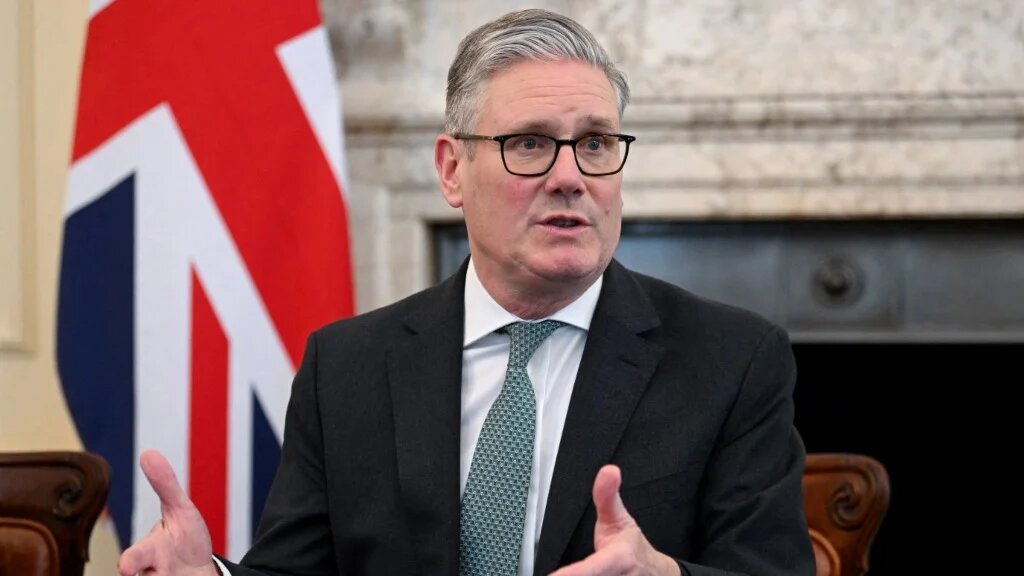
Starmer: ‘Much Work Needed’ to Sustain Iran-US Ceasefire, Reopen Hormuz The United Kingdom Prime Minister, Keir Starmer, has said there is “a lot of work to do” to transform the fragile ceasefire between Iran and the United States into a lasting peace, warning that efforts must also focus on reopening the critical Strait of
Starmer: ‘Much Work Needed’ to Sustain Iran-US Ceasefire, Reopen Hormuz
The United Kingdom Prime Minister, Keir Starmer, has said there is “a lot of work to do” to transform the fragile ceasefire between Iran and the United States into a lasting peace, warning that efforts must also focus on reopening the critical Strait of Hormuz.
Starmer spoke on Wednesday during a visit to Saudi Arabia, where he is holding talks with Gulf allies to sustain the two-week truce and restore global energy flows disrupted by the conflict.
According to him, the ceasefire offers an opportunity to stabilise energy markets, particularly by allowing the resumption of oil and gas shipments through the Strait, a key global trade route.
“There’s a lot of work to do to make sure that ceasefire becomes permanent and brings about the peace we all want to see,” Starmer said while addressing UK and Saudi personnel at the King Fahd Air Base in Taif.
“But also a lot of work to do in relation to the Strait of Hormuz, which has an impact everywhere across the world.”
The truce followed a warning by US President, Donald Trump, who said “a whole civilisation will die” if Iran failed to end hostilities and reopen the waterway—remarks that prompted renewed calls for de-escalation from Downing Street.
Despite the agreement, uncertainty remains over the reopening of the Strait.
Reports indicate that oil tankers have yet to resume passage, with shipping firms warning that vessels still require clearance from Iran’s Islamic Revolutionary Guard Corps before sailing.
The ceasefire deal, brokered with the involvement of Pakistan, is also facing complications over its scope.
While Iran and Pakistan maintain that it includes hostilities in Lebanon, Israeli authorities insist the truce does not extend to the Lebanese front, where fighting with Hezbollah has intensified.
Reacting to the development, the UK opposition Conservative Party, through its shadow housing secretary, James Cleverly, described the ceasefire as an opportunity for Iran to reconsider its conduct, particularly regarding nuclear ambitions.
“We’ll welcome this two-week ceasefire, but it’s time that mustn’t be wasted,” he said, stressing that preventing Iran from acquiring nuclear weapons remains a priority.
On his part, the leader of the Liberal Democrats, Ed Davey, expressed support for the truce but questioned the reliability of the US administration, warning of economic consequences if the Strait remains closed.
Similarly, Reform UK leader, Nigel Farage, criticised Starmer’s diplomatic standing, suggesting the Prime Minister may face challenges securing cooperation from Gulf allies.
The UK government had earlier convened a virtual summit involving over 40 countries to coordinate efforts to secure the Strait once hostilities subside, followed by a military planning conference aimed at reinforcing maritime safety.
The conflict, which began in February after coordinated strikes by the US and Israel over concerns about Iran’s nuclear programme, triggered retaliatory attacks across the Gulf region and led to the closure of the Strait of Hormuz—through which about a fifth of global energy supplies typically pass.
The disruption has driven up global oil prices, raising fears of inflation and increased fuel costs worldwide, as efforts continue to prevent a broader regional escalation.











Leave a Comment
Your email address will not be published. Required fields are marked with *